Returning to work after years of raising kids can feel like showing up to a reunion where everyone got a promotion and you got really good at negotiating with a toddler. Here's the reframe that changes everything: a career gap is not a confession, it's just a line on your resume — and you get to decide how it reads. Done right, a stay-at-home parent resume looks like what it is: a capable professional who's ready to get back to it.
Should you mention the gap at all?
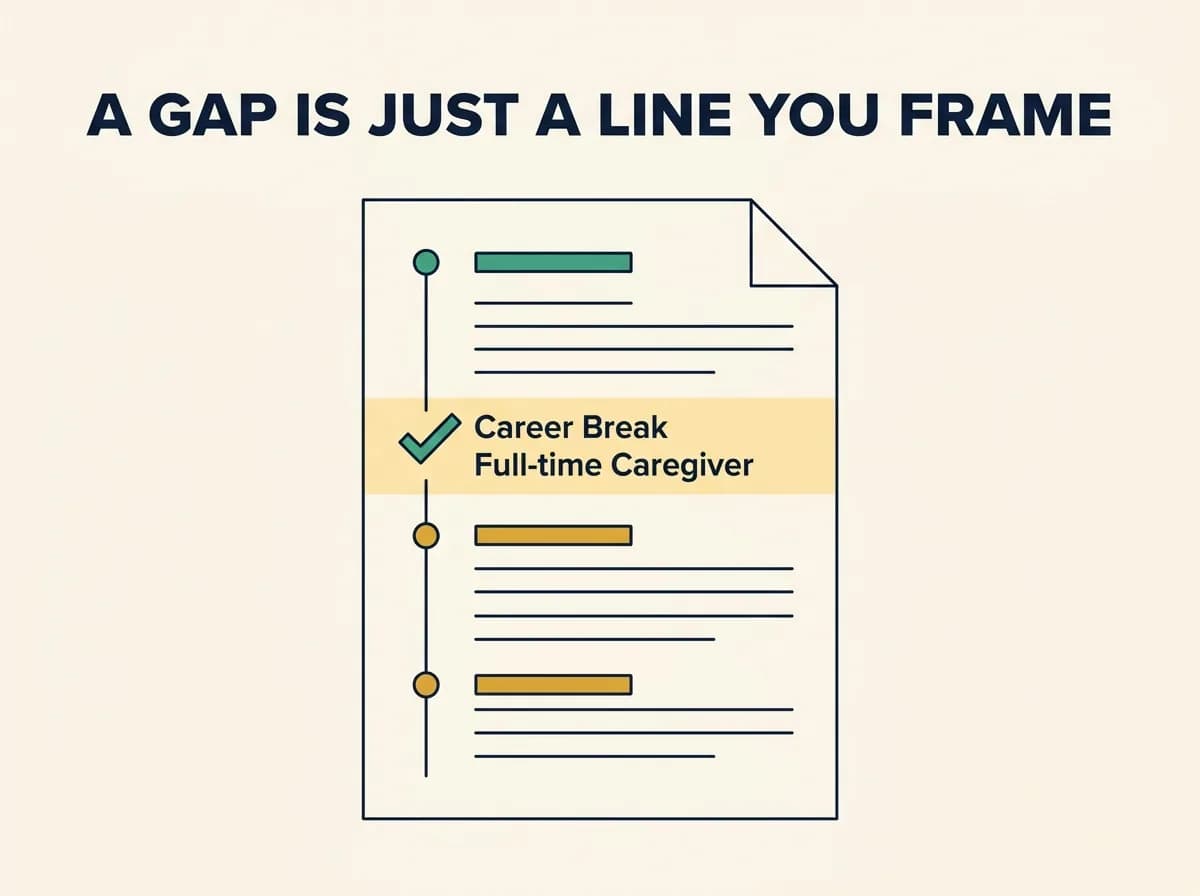
Yes — hiding it looks worse than owning it. A blank stretch with no explanation makes a recruiter assume the worst; a short, confident line closes the question. You don't owe anyone a detailed story. A simple entry does the job:
Career Break — Full-time Caregiver (2021–2025) Took a planned break to raise two children. Stayed current through freelance projects and an online certification in digital marketing.
One line, zero apology, and a signal that you kept moving. That's all it needs.
Lead with transferable skills
The years away built real, provable skills — the trick is naming them in professional language rather than selling yourself short:
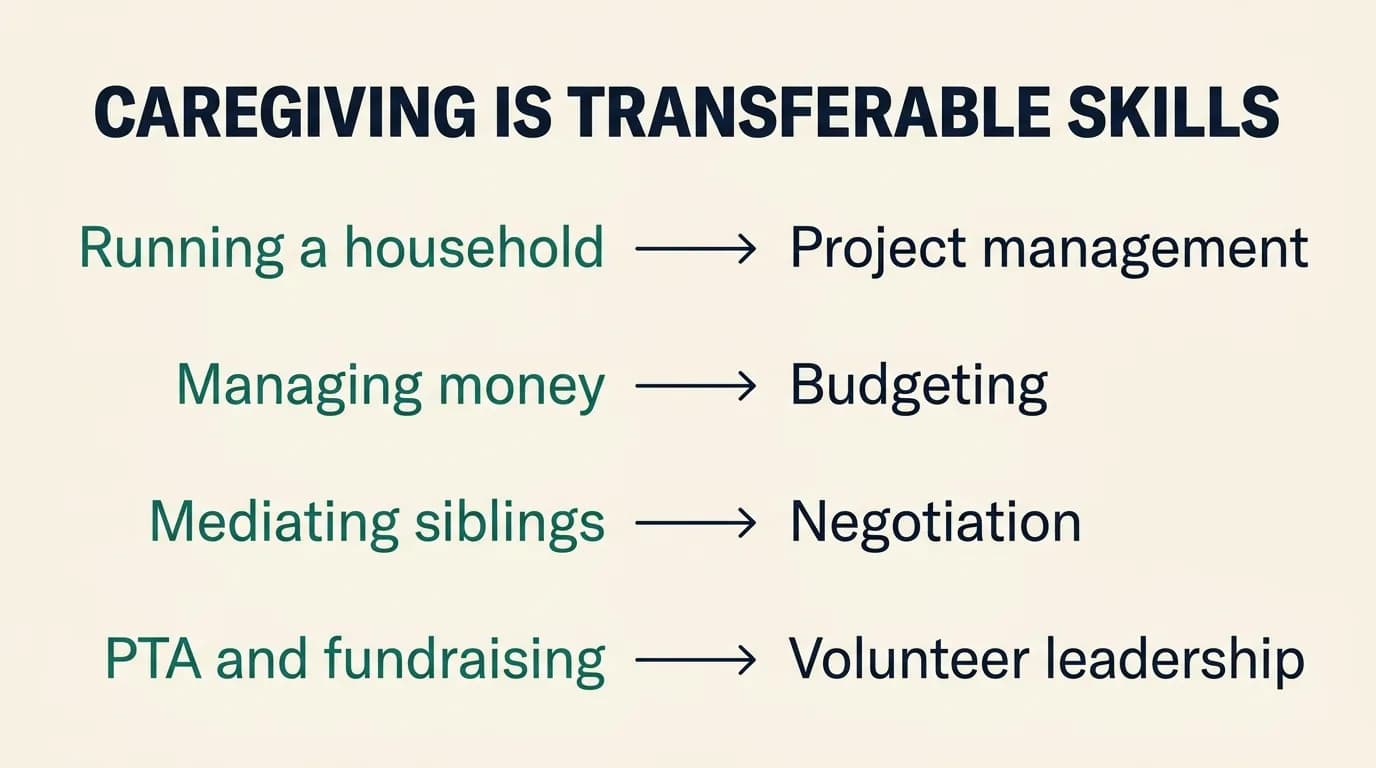
- Project and time management — running a household on a schedule is operations.
- Budgeting — you managed real money against real constraints.
- Negotiation and conflict resolution — anyone who's mediated siblings can handle stakeholders.
- Volunteer leadership — PTA roles, event organizing, and fundraising are genuine management experience.
Pull the ones the job actually asks for and anchor each to something concrete. Our resume skills guide has role-by-role lists to borrow from.
Choose a format that flatters the gap
A combination format works best for returners: lead with a strong summary and a skills section so your abilities land before the dates do, then list your history — including the career break — below. This keeps the focus on what you can do rather than on the timeline.
A sample summary
Marketing coordinator returning to work after a planned career break, with 5 years of pre-break experience running campaigns and events. Stayed current with a 2024 digital marketing certification and freelance social media work. Skilled in content, email, and analytics, and ready to bring that back to a full-time team.
It names the target role, addresses the break head-on, proves you stayed sharp, and points forward. For the formula behind it, see resume summary examples, and for a full document, our stay-at-home parent resume example.
Mistakes to avoid
- Apologizing for the gap. Confidence reads as competence. State it plainly and move on.
- Leaving it totally unexplained. A one-line entry beats a mysterious hole.
- Underselling caregiving skills. "Managed household logistics" is real; frame it professionally without overreaching.
- Ignoring the ATS. Returners often use decorative templates that break parsing. Keep it clean and keyword-matched — see how to optimize your resume for ATS.
You're more ready than you feel
Employers hire returning parents all the time; a clear, confident resume is what makes it easy for them to say yes. Frame the break in a line, lead with transferable skills, keep it tailored and clean, and the gap becomes a footnote instead of the headline. Talorr helps you build a returner-friendly resume from a template and check it against any job before you apply.
Frequently asked questions
- How do I list being a stay-at-home mom on a resume?
- Add a brief, confident entry such as 'Career Break — Full-time Caregiver (2021–2025)' with one line noting anything that kept you current, like freelance work or a certification. Don't apologize or over-explain; a single clear line closes the question far better than an unexplained gap.
- How do I explain a career gap when returning to work?
- State it plainly in one line, mention anything that kept your skills current, and then let a strong summary and skills section carry the resume. A combination format that leads with abilities before dates works best for returners.
- What skills should a returning parent put on a resume?
- Focus on transferable skills the job asks for: project and time management, budgeting, negotiation and conflict resolution, and any volunteer leadership like PTA or event organizing. Anchor each to something concrete rather than listing them in the abstract.