New laws in places like New York City and Illinois mean some job applications now ask a polite little question: "Do you consent to AI being used to evaluate your application?" Tick the box, and a part of you feels like you just dodged a robot. But did you?
Short answer: opting out rarely helps, and it can quietly hurt. Let's unpack why.
What "AI screening" usually means
It's less Skynet, more spreadsheet. Most "AI" in hiring is an applicant tracking system (ATS) that parses your resume and ranks it against the job description. Some employers layer on extra scoring, but the core job is the same: match keywords, sort candidates, hand a shortlist to a human.
So when you opt out, you're not escaping judgment. You're just asking for a slower, more manual version of it.
What opting out actually does
Here's the part the consent box doesn't explain:
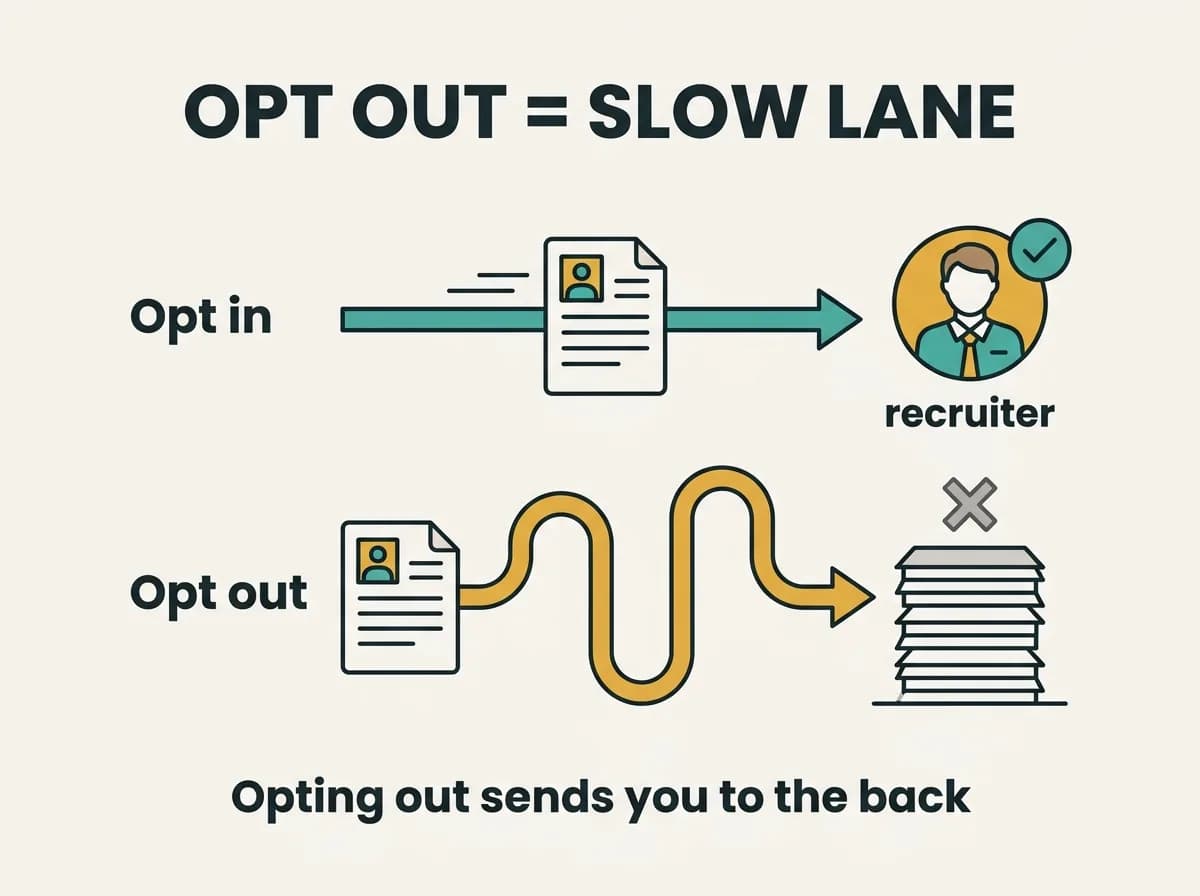
- Your application still gets read — eventually, by a human, if one has time.
- You often lose your place in line. Automated ranking is what gets resumes in front of recruiters quickly. Opt out and you may sit in a separate, slower pile.
- At high-volume employers, "slower pile" can mean "never." Some postings get thousands of applicants. Manual review of opt-outs is not always a real promise.
Opting out to "beat the bots" usually means beating yourself to the back of the queue.
When opting out might make sense
It's not never. Consider opting out if:
- You have a documented disability and the automated process isn't accessible — opt out and request a human review as an accommodation.
- You have a genuine, specific concern about a particular employer's tool. (Rare, but valid.)
In those cases, opting out is a deliberate choice with a follow-up plan, not a reflex.
The better move: beat the system by feeding it well
You don't fear a search engine — you optimize for it. Treat ATS the same way. Instead of opting out, opt in and win:
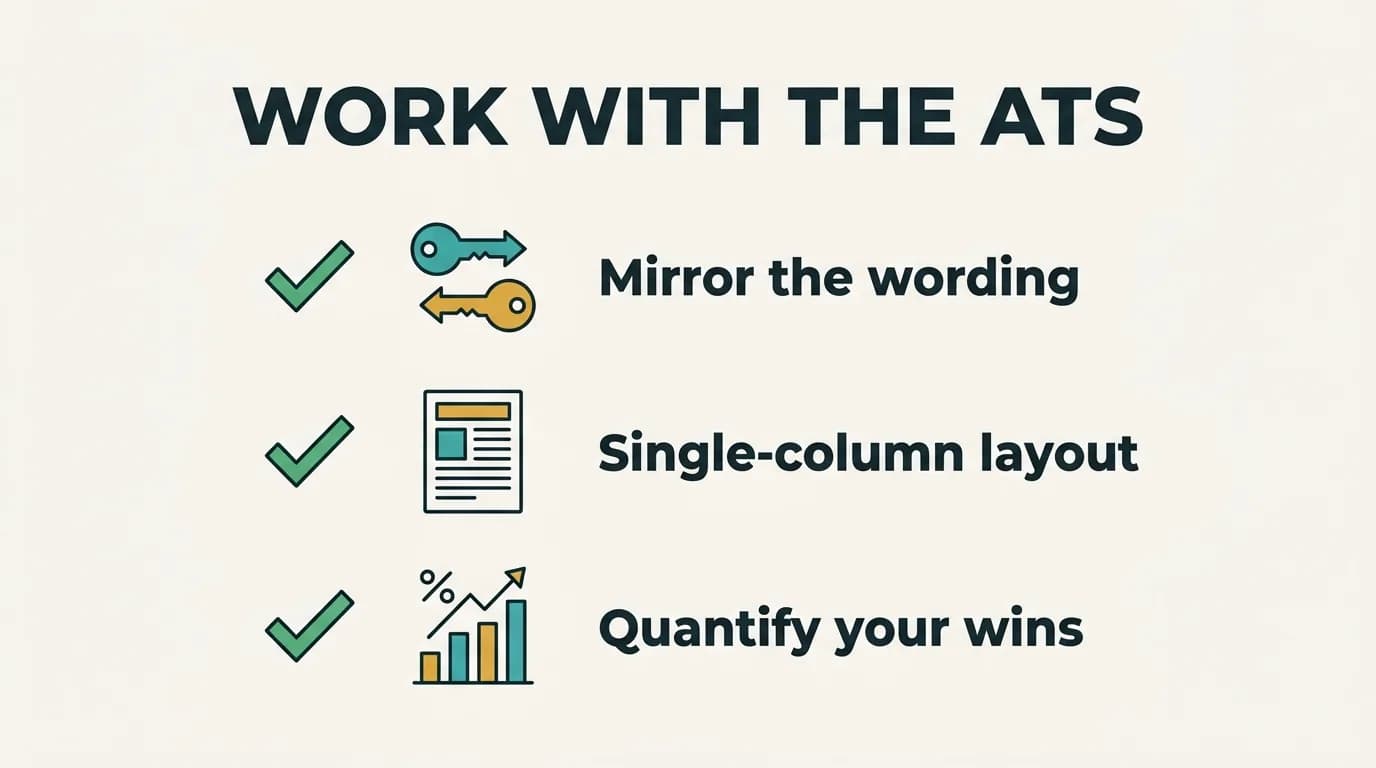
- Mirror the job description's exact wording for skills and titles.
- Use a clean, single-column layout the parser can read. (Tables and columns are where resumes go to die.)
- Quantify your wins so the human who sees your ranked resume actually remembers you.
The ATS isn't your enemy. A badly formatted resume is. For the full playbook, see how to optimize your resume for ATS — and relax, because an ATS can't detect AI-written resumes anyway.
Check your score instead of opting out
Rather than gambling on the consent box, see exactly how the machine reads you. Talorr's free ATS resume checker scores your resume against any job description and shows the missing keywords — so you can work with the system instead of hiding from it.
Frequently asked questions
- Does opting out of AI screening improve my chances?
- Usually no. Opting out typically moves your application to a slower, manual pile and can cost you your place in line, especially at high-volume employers. You're better off optimizing your resume to rank well than avoiding the system.
- Is AI resume screening legal?
- Yes, though it's increasingly regulated. Laws in places like NYC and Illinois require disclosure and, in some cases, the option to opt out. The screening itself is legal as long as employers follow local bias-audit and notice rules.