"What is your greatest weakness?" trips up candidates because the obvious moves both backfire. Naming a fatal flaw sinks you; the cliché humble-brag ("I'm a perfectionist," "I work too hard") signals that you're dodging the question. Interviewers have heard both a thousand times. There's a narrow path between "I have no flaws" and "I once got fired for napping in the server room" — this is how you walk it.
What the question is really testing
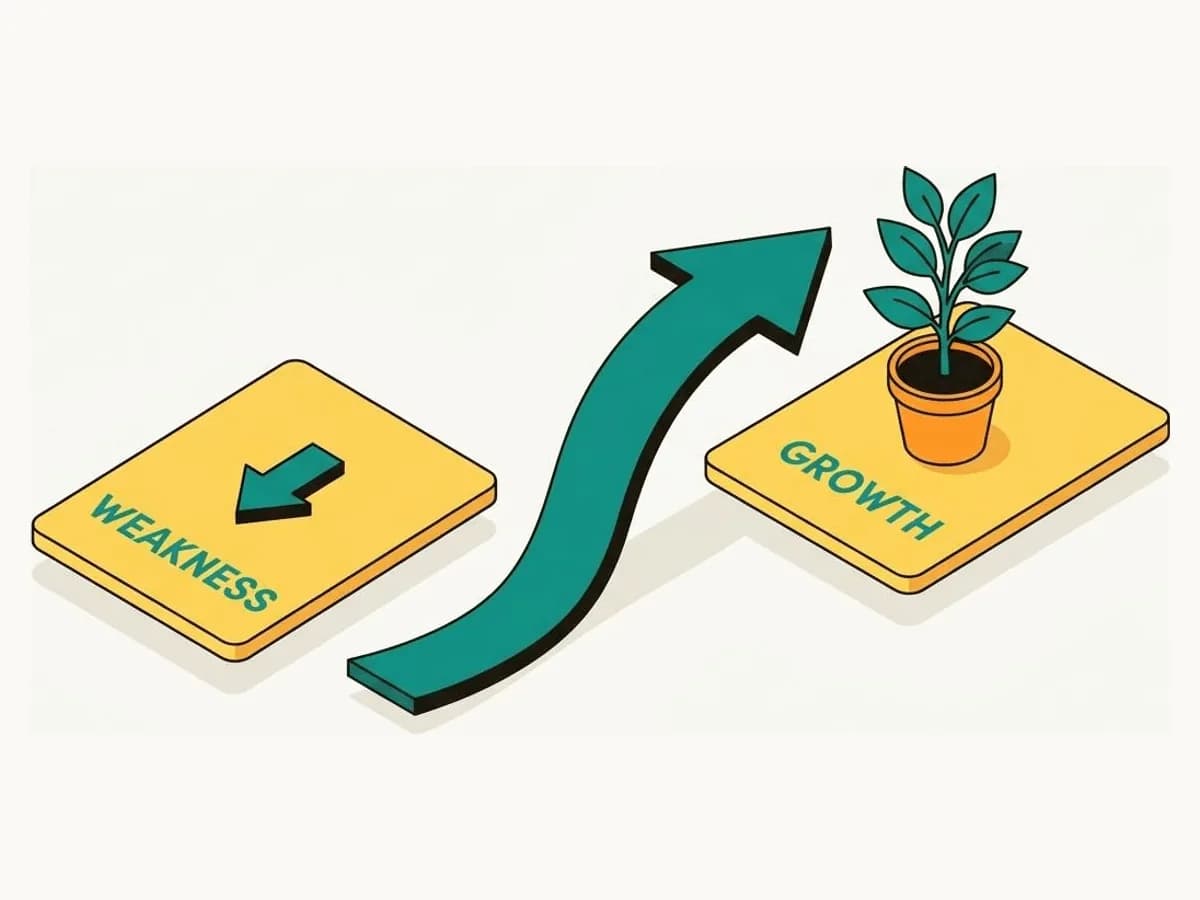
The interviewer isn't hunting for a flaw to disqualify you. They're testing self-awareness and growth: do you understand your gaps, and do you actively manage them? A good answer proves both.
The framework
A strong answer has three parts:
- A real, non-fatal weakness — genuine, but not core to the job. (Don't tell a finance team your weakness is attention to detail.)
- The system you built to manage it — the concrete steps you take so it doesn't cause problems.
- Evidence it's working — a brief sign of progress.
This structure turns a weakness into a demonstration of maturity.
Sample answers
Delegation
I used to take on too much myself because I trusted my own execution. It became a bottleneck as my team grew. I started running a weekly planning session where I assign ownership explicitly and check in on outcomes, not steps. My team ships more now, and I've stopped being the blocker.
Public speaking
Presenting to large groups didn't come naturally — I'd over-prepare and still feel rushed. I joined an internal speaking group and now volunteer to present our sprint demos. I'm not flawless, but last quarter I ran an all-hands segment, which I'd have avoided a year ago.
Saying no
I tended to say yes to every request, which spread me thin. I built the habit of asking "what should I drop to take this on?" before committing. It's made my priorities clearer and my commitments more reliable.
Tips that make it land
- Be specific. A vague weakness sounds invented. A concrete one sounds honest.
- Spend most of the answer on the fix, not the flaw.
- Keep it under 90 seconds. This isn't a confession.
- Don't disguise a strength. Interviewers see through "I just care too much."
Pick a weakness off the critical path
The safest choice is a real weakness that isn't central to the role you're interviewing for. Read the job description, identify the must-have competencies, and pick something adjacent — then show the system you use to keep it in check.
Package the answer with the STAR method so it has a concrete example and result, and rehearse it right after your "tell me about yourself" opener — they're usually back-to-back.
Frequently asked questions
- What's the best way to answer 'what is your greatest weakness?'
- Name a real but non-fatal weakness, explain the concrete system you use to manage it, and give brief evidence it's improving. Spend most of the answer on the fix, not the flaw, and keep it under 90 seconds.
- Should I say 'I'm a perfectionist' as my weakness?
- No. Disguised strengths like 'I'm a perfectionist' or 'I work too hard' read as dodging the question. Interviewers are testing self-awareness, so give a genuine weakness that isn't core to the role.