Sending the same resume to every job is the single most common reason qualified candidates never hear back. Most companies now run applications through an applicant tracking system (ATS) before a human ever reads them, and that system scores how closely your resume matches the specific posting. Tailored resumes consistently score 40–60% higher than the same resume sent generically — which translates directly into more interviews.
The good news: tailoring does not mean rewriting your resume from scratch every time. With a repeatable workflow it takes about five minutes per application. A generic resume is a message-in-a-bottle strategy: technically it's out there, realistically no one is reading it.
Why tailoring works
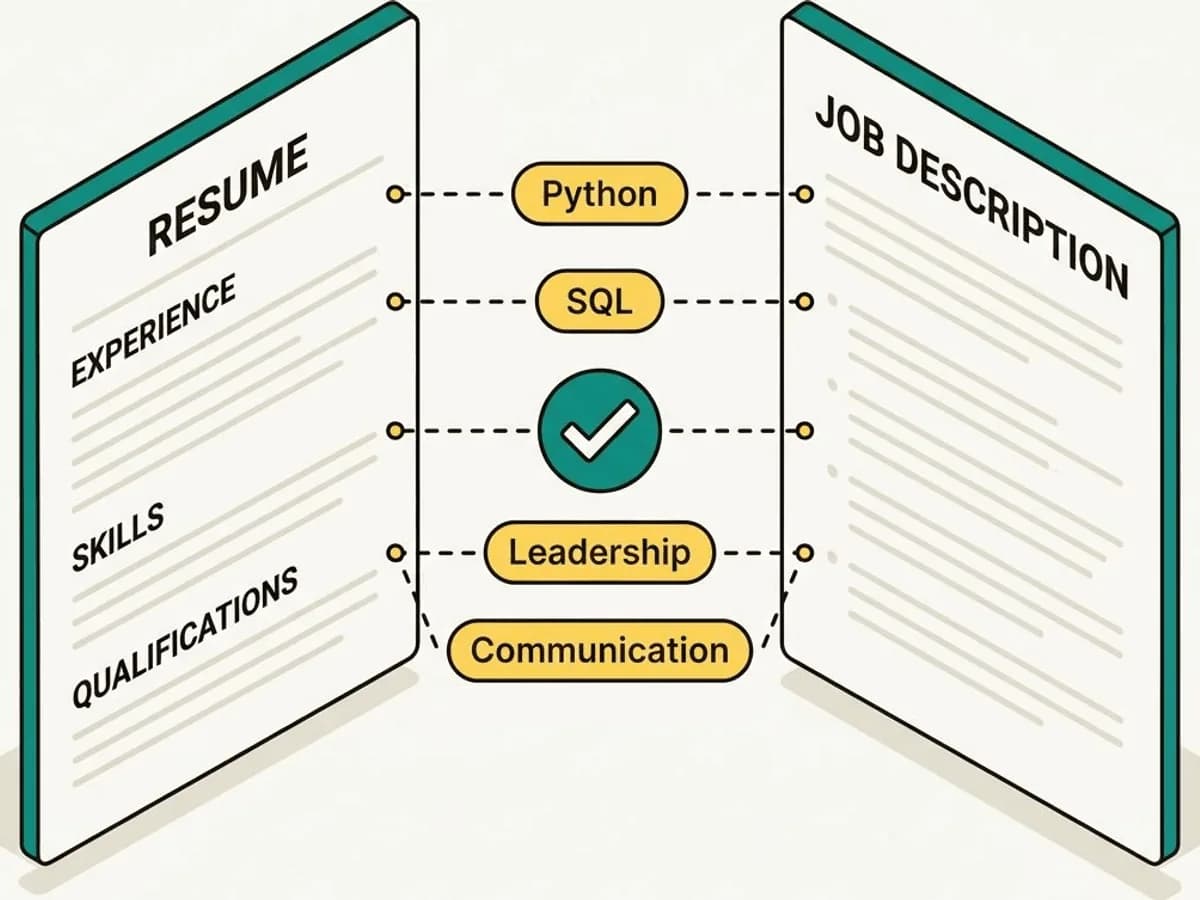
Modern ATS platforms do two things. First, they parse your resume into structured text. Second, they rank it against the job description using keyword and semantic matching. A recruiter then reviews the top-ranked candidates.
When your resume mirrors the language of the posting, you win on both passes: the system ranks you higher, and the recruiter immediately sees that you fit the role. A generic resume forces the reader to translate your experience into their requirements — and most won't bother.
The 5-minute tailoring workflow
- Pull the job description and read it once, end to end.
- Highlight repeated terms — tools, skills, certifications, and responsibilities that appear more than once or sit in the "requirements" section. These are your priority keywords.
- Mirror the exact job title near the top of your resume (in your summary or headline) when it's truthful.
- Rewrite your top 2–3 bullets under your most recent role so they lead with the outcomes most relevant to this job.
- Re-check your match — aim for a 70–80% keyword overlap, not 100%. Anything higher reads as stuffed.
What to change for every application
- Professional summary — rewrite the first sentence to name the target role and your single strongest, most relevant achievement.
- Skills section — reorder so the tools and methods the posting asks for appear first. Add any genuinely-held skills that are missing.
- The first bullets under each role — recruiters read top-down. Lead with the work that matches this job.
- Keywords in context — every priority term should appear at least once next to a real result, not just in a skills list. See how ATS keyword matching works for the full method.
What you should never change
Tailoring is about emphasis, not invention.
- Never add experience, titles, or skills you don't have. It's the fastest way to fail a reference check or a technical interview.
- Don't keyword-stuff. Repeating "project management" eight times now triggers a penalty on most semantic ATS platforms.
- Don't bury your strongest evidence to fit a keyword. Proof beats vocabulary.
Quantify everything you can
The bullets that survive both the ATS and the recruiter share one trait: a number. Use the simple formula "Accomplished X, measured by Y, by doing Z." For example: "Cut page load time 40% by migrating the marketing site to a static build." Numbers make your impact believable and give the recruiter something concrete to remember.
Tailor in seconds, not minutes
Doing this by hand works, but it's tedious to repeat for every application. Talorr reads any job description, scores your fit, surfaces the keywords you're missing, and rewrites weak bullets to match — so you can ship a tailored, ATS-ready resume in seconds and spend your time on the roles worth applying to. Already have a draft? Check its ATS score free.
Frequently asked questions
- How much should I tailor my resume for each job?
- Focus on the summary, skills section, and the first 2–3 bullets under your most recent role. Aim for a 70–80% keyword overlap with the posting — that's enough to rank well without looking stuffed.
- Does tailoring my resume really increase callbacks?
- Yes. A tailored resume typically scores 40–60% higher in applicant tracking systems than the same resume sent generically, because it matches both the ATS keyword filter and the recruiter's quick scan.