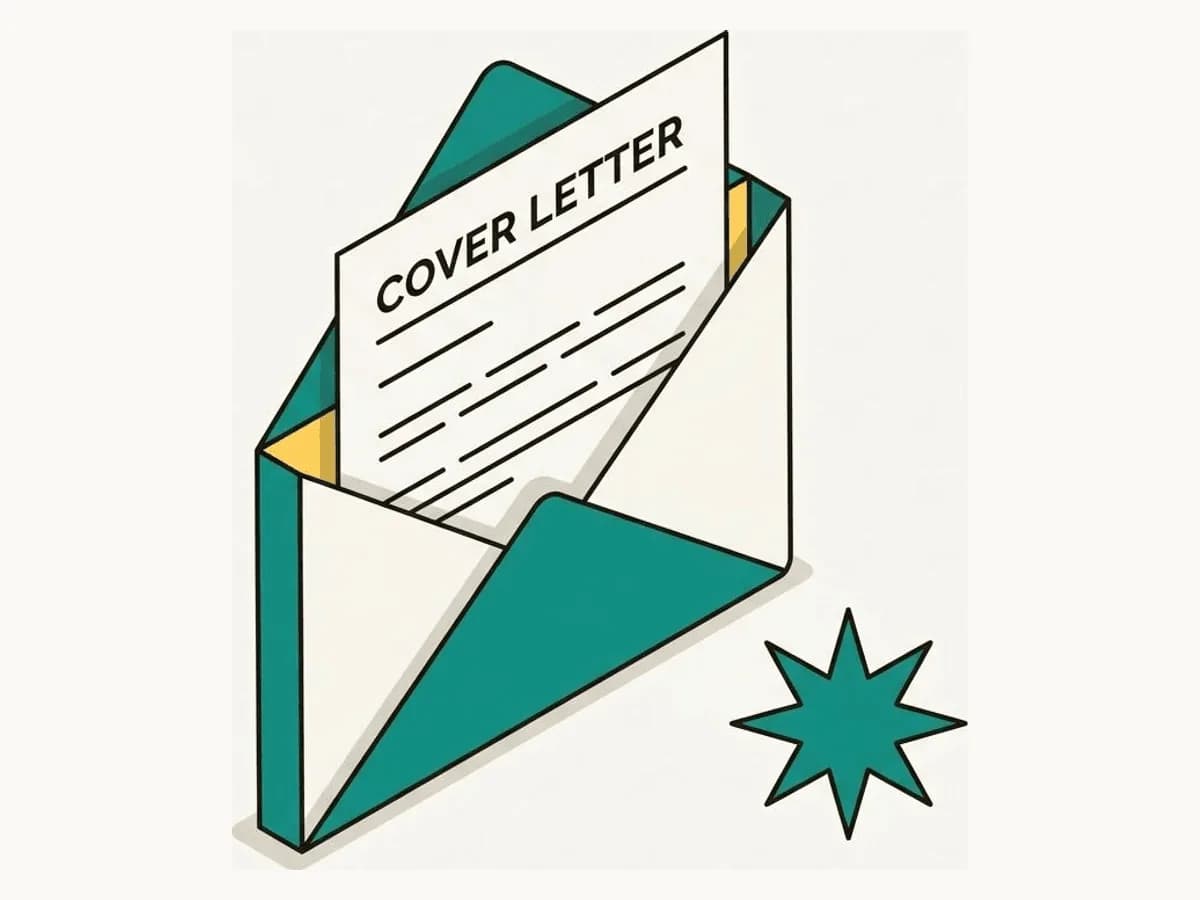
Cover letters are quietly back. As AI made it trivial to fire off hundreds of applications, a genuinely tailored cover letter became a rare signal that you actually care about this specific role — and recruiters notice. The catch: a generic AI cover letter is worse than none, because it signals the opposite. A generic AI cover letter is like a handwritten thank-you card that opens "Dear [NAME]" — somehow the effort makes it worse. Here's how to use AI to write one that gets read.
When a cover letter still matters
Send one when the application invites it, when you're changing careers and need to connect the dots, or when the role is competitive enough that a strong note tips the decision. Skip it only when an application explicitly says not to include one.
The structure that works
A good cover letter is four short paragraphs, not a page of prose:
- Opening — name the role and lead with a specific reason you're a strong fit, not "I am writing to apply for…"
- Proof — one or two concrete, quantified achievements that map to the job's top requirements.
- Why them — a specific reference to the company, product, or mission that shows you did your homework.
- Close — a confident, brief sign-off and a clear next step.
Keep the whole thing under 250 words. Recruiters skim; brevity is a feature — see how long a cover letter should be and how to end a cover letter for the details. New to the format entirely? Start with how to write a cover letter.
What AI should and shouldn't do
AI is excellent at drafting the structure, matching your experience to the posting's language, and tightening the prose. What it cannot do is the part that makes a cover letter work: the specific, genuine reason you want this job. Supply that yourself, then let AI build around it.
How to avoid the generic AI letter
The dead giveaways are a generic opening, no mention of the actual company beyond its name, and recycled phrasing. Beat them by giving the AI three inputs: the job description, your resume, and one or two specific things you genuinely find compelling about the company. Without that third input, every AI cover letter sounds the same.
A fast, effective workflow
- Paste the job description and your resume.
- Add one or two specific notes about the company or role.
- Have the AI draft the four-paragraph structure mirroring the posting's priorities.
- Edit the opening and the "why them" paragraph in your own words.
- Cut it to under 250 words.
Let Talorr write it from your resume
Talorr's AI cover letter generator reads the job and your resume, drafts a tailored letter that mirrors the role's priorities, and lets you edit it inline — so you can send a genuinely personalised letter in a minute instead of skipping it or sending a generic one. Use AI for the draft, add the human spark, and stop letting your cover letter get ignored.
Frequently asked questions
- Should I use AI to write my cover letter?
- Yes, AI is a great way to draft the structure and match your experience to the job, as long as you add the specific, genuine reason you want that particular role. A purely generic AI cover letter can hurt you, so always personalise the opening and the 'why this company' paragraph.
- How long should a cover letter be?
- Keep it under about 250 words across four short paragraphs: a specific opening, one or two quantified proof points, a genuine reason you want this company, and a brief confident close. Recruiters skim, so brevity helps.