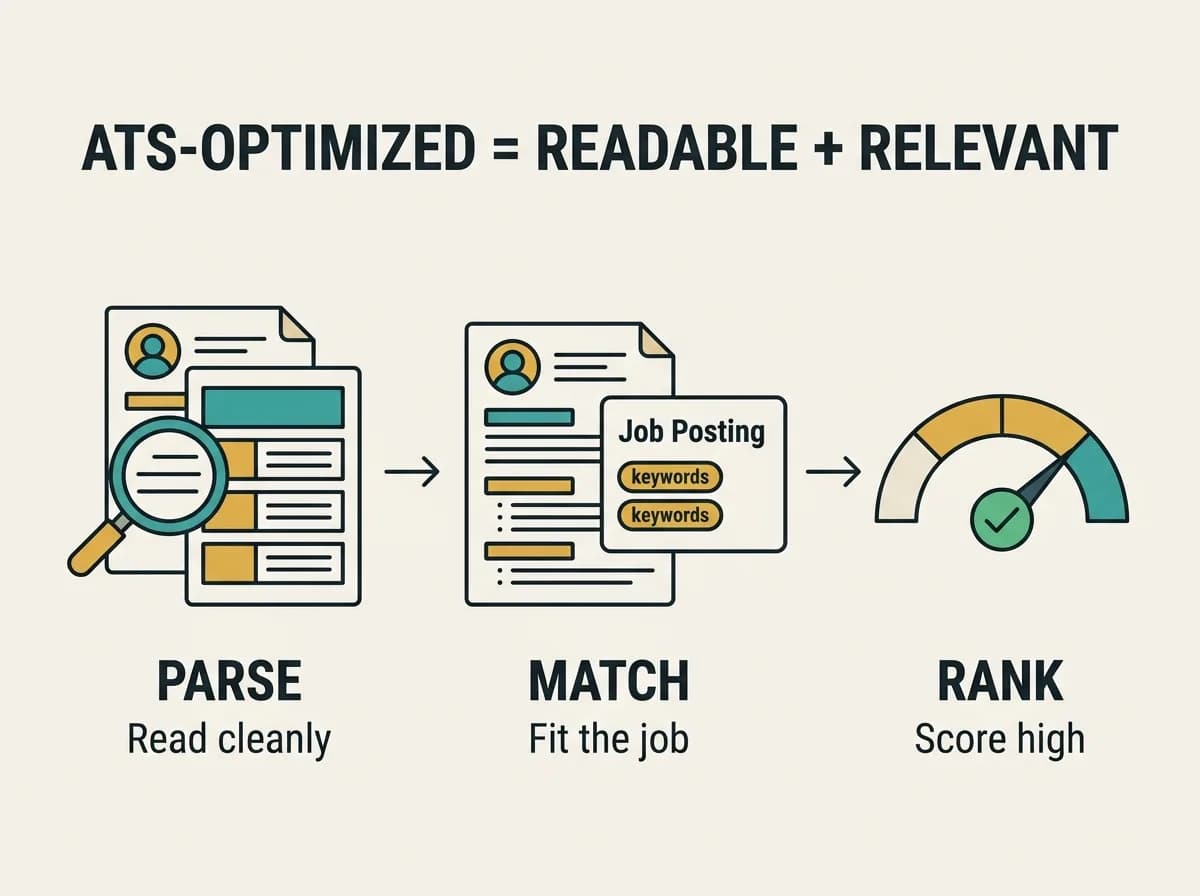
"ATS-optimized resume" gets thrown around like everyone agrees what it means. Strip away the buzzwords and it's two things: a resume a machine can read cleanly, and one that matches the job well enough to rank near the top. That's it.
Let's make it concrete.
What an ATS does in one breath
An applicant tracking system parses your resume into structured fields, then matches that content against the job posting and ranks you for a recruiter. "Optimized" simply means you make both steps easy: easy to parse, easy to match.
What makes a resume ATS-optimized
A resume earns the label when it checks these boxes:
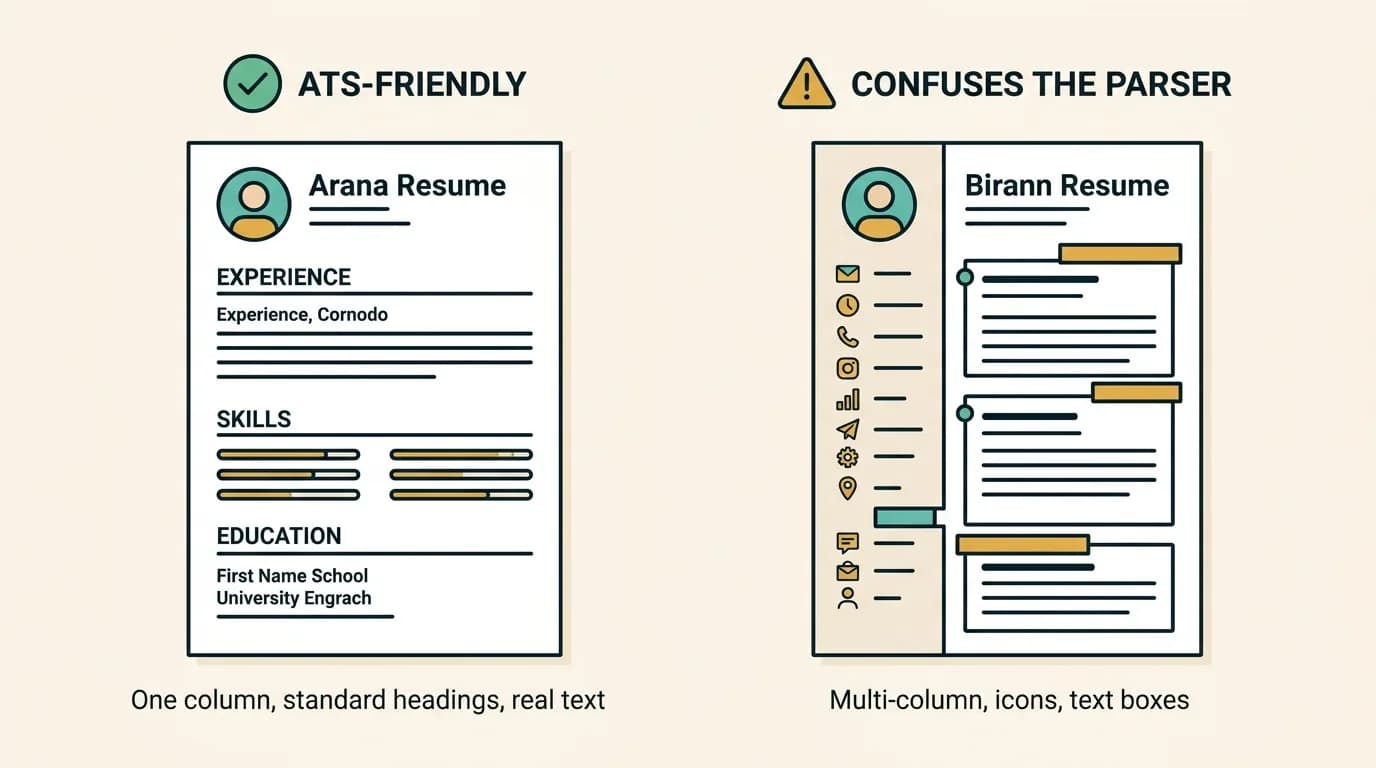
- Single-column layout. Multi-column and sidebar designs confuse parsers, which read left to right and scramble the order.
- Standard section headings. "Experience," "Education," "Skills" — not "Where I've Made Magic."
- Real text, not images. A resume saved as a graphic is invisible to the parser. So are skills hidden inside logos or icons.
- Keyword match with the job. The skills and titles in the posting should appear, in the posting's words, somewhere true on your resume.
- A clean, common font and standard file type. A normal .docx or text-based PDF beats a beautifully designed nightmare.
What it is NOT
ATS-optimized does not mean ugly, and it does not mean keyword-stuffed. Cramming a job title in white text fools nobody and looks desperate to the human who eventually reads you. Optimization is about clarity and honest matching, not tricks.
It also doesn't mean boring. You can have a clean, parseable layout that still looks sharp — the two aren't enemies. Pick the right skills, phrase them like the job does, and you get both.
The 30-second checklist
Before you submit, confirm:
- One column, standard headings, real text.
- The top 8 to 12 skills from the posting appear, truthfully, on the page.
- It opens cleanly as a text-based PDF or .docx.
- A human would actually want to read it.
See your resume the way the ATS does
Guessing whether you nailed it is stressful. Talorr's free ATS resume checker parses your resume exactly like the software does, scores the match against any job, and lists the keywords you're missing — so "ATS-optimized" stops being a mystery and becomes a number you can fix.
Frequently asked questions
- What does ATS-optimized mean?
- It means your resume is easy for applicant tracking software to parse (clean single-column layout, standard headings, real text) and matches the job description well enough to rank highly. In short: machine-readable and relevant.
- Does an ATS-optimized resume have to look plain?
- No. You can have a clean, parser-friendly layout that still looks professional and modern. The key is a single column, standard fonts, and real text — not stripping out all visual polish.