A cover letter for a scientific journal is a different animal from a job cover letter. You're not selling yourself to a recruiter — you're pitching a manuscript to an overworked editor who decides, in about a minute, whether your paper is worth sending out for review. Get it right and you smooth the path. Get it wrong and you add friction before anyone reads your science.
What the editor is actually looking for
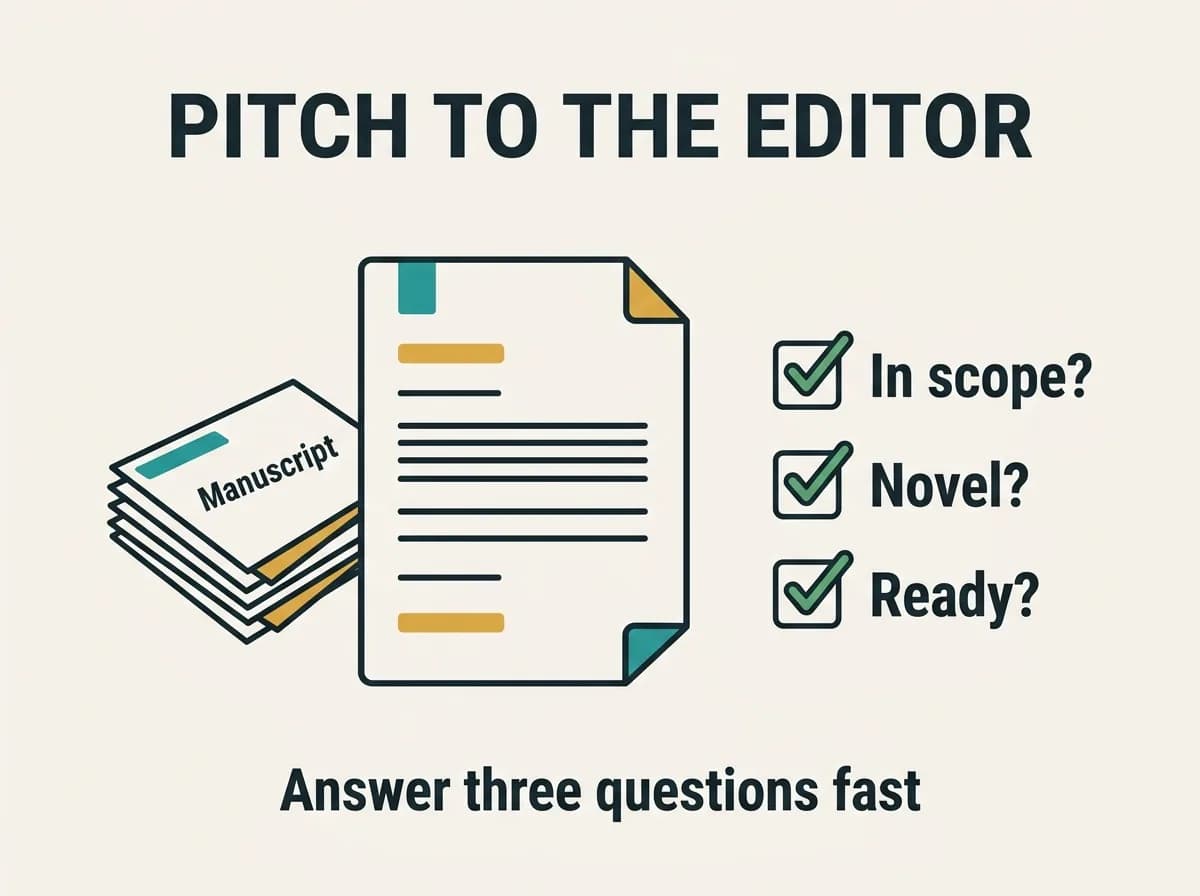
The editor wants to answer three questions fast: Is this in scope for the journal? Is it novel and significant? Is it ready for review? Your letter's only job is to answer those clearly. It is not the place for modesty, and it is not the place for hype.
The standard structure
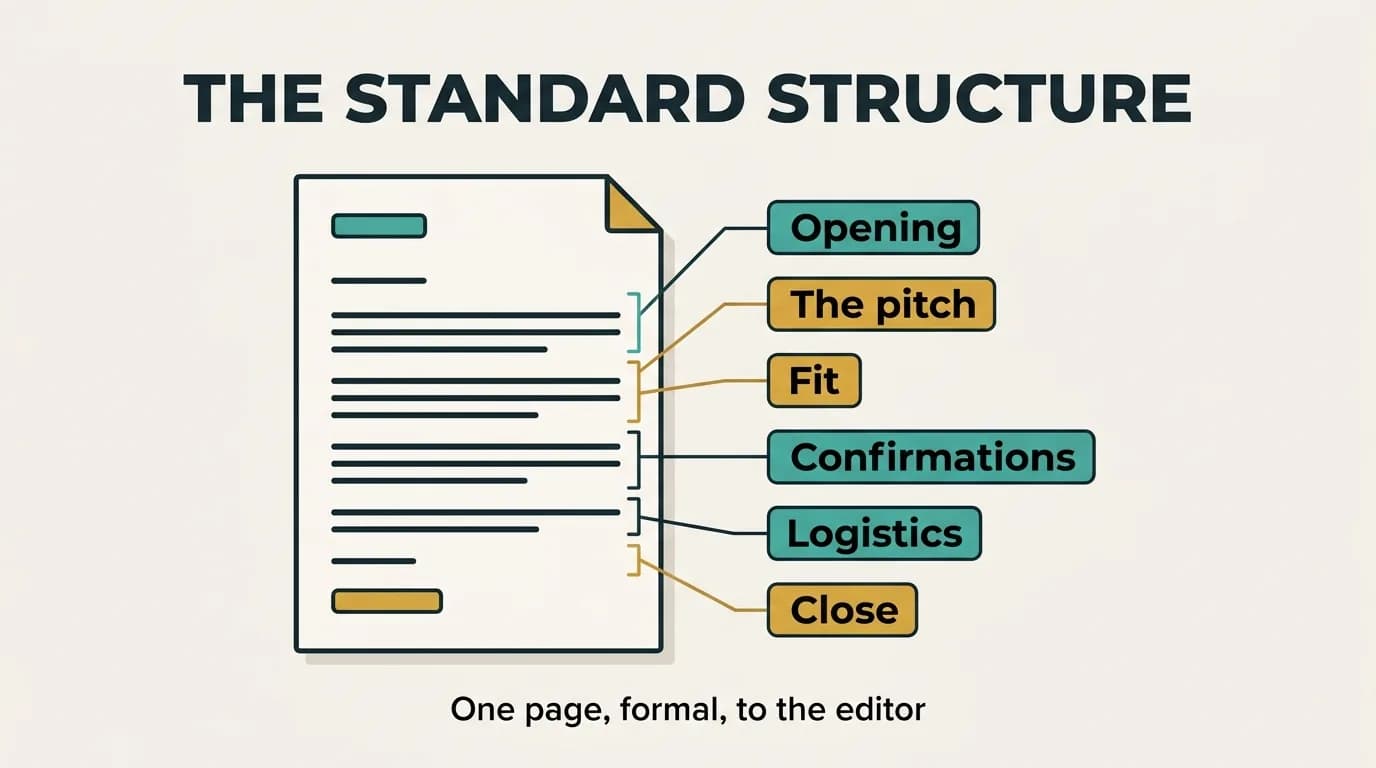
Keep it to one page, formal, addressed to the editor by name when you can find it:
- Opening: the manuscript title, the article type, and the journal you're submitting to.
- The pitch: two to three sentences on what you did and why it matters — the key finding and its significance, in plain terms.
- Fit: one sentence on why it suits this journal's scope and readership.
- Confirmations: the work is original, not under consideration elsewhere, and all authors approve the submission.
- Logistics: any required statements — conflicts of interest, suggested or excluded reviewers, ethics approvals.
- Close: a brief, professional sign-off with the corresponding author's details.
What to leave out
- Don't paste your abstract. Summarize the significance; the abstract is already in the manuscript.
- Don't oversell. "This is the most important finding in the field" makes editors wary, not excited.
- Don't ramble. Editors read hundreds of these. One tight page beats two padded ones — the two-page rule applies here too unless guidelines say otherwise.
Always check the journal's guidelines
Every journal has its own author instructions, and some require specific statements or formats. Read them before you write, and follow them exactly — ignoring the guidelines is the fastest way to look careless.
A note on the job-hunting crowd
If you landed here looking for a job cover letter rather than a manuscript one, you want a different guide: start with how long a cover letter should be and let Talorr's cover letter generator draft a tailored one from your resume and the role.
Frequently asked questions
- What should a cover letter for a journal submission include?
- State the manuscript title, article type, and target journal; summarize the key finding and its significance in two to three sentences; explain why it fits the journal's scope; confirm the work is original and approved by all authors; and include any required statements like conflicts of interest or suggested reviewers. Keep it to one page.
- Should I include my abstract in the journal cover letter?
- No. Summarize the significance of your findings in a few sentences instead. The abstract is already part of the manuscript, so repeating it wastes the editor's time. Focus the letter on scope fit, novelty, and required confirmations.