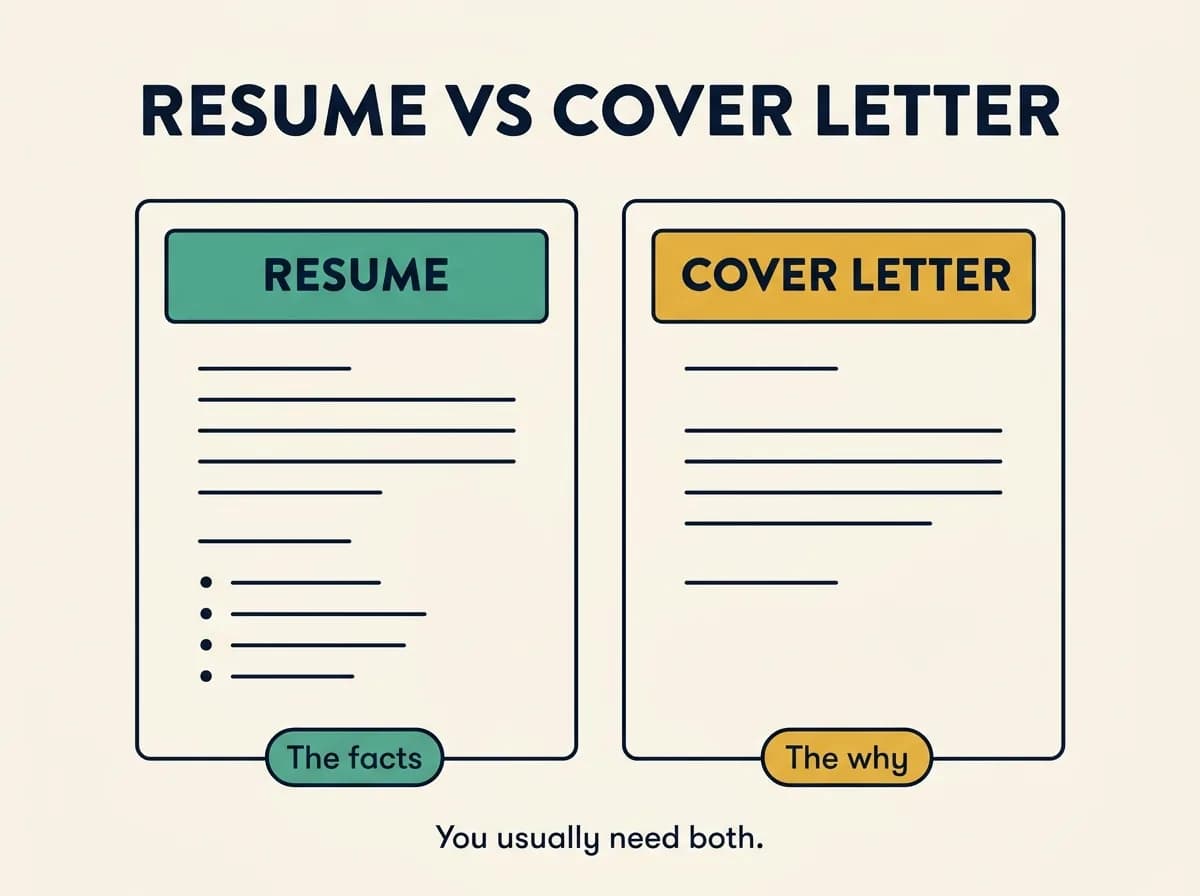
People treat a cover letter and a resume like twins. They're more like a trailer and the movie. One is a tight, scannable record of what you've done; the other is a short pitch for why it matters to this job. Here's the difference, and whether you need both.
What a resume does
Your resume is the facts: roles, dates, achievements, skills, and education in a scannable, ATS-friendly format. It's read top to bottom in about six seconds and it does the heavy lifting. Recruiters filter on it first, so it carries the keywords and the proof.
What a cover letter does
The cover letter is the why: why this role, why this company, why you. It connects dots a resume can't (a career change, a relocation, an unusual path) and adds a human voice. It's a complement, not a clone. Think short prose, four paragraphs, under 250 words, heavily tailored to each posting.
Do you actually need both?
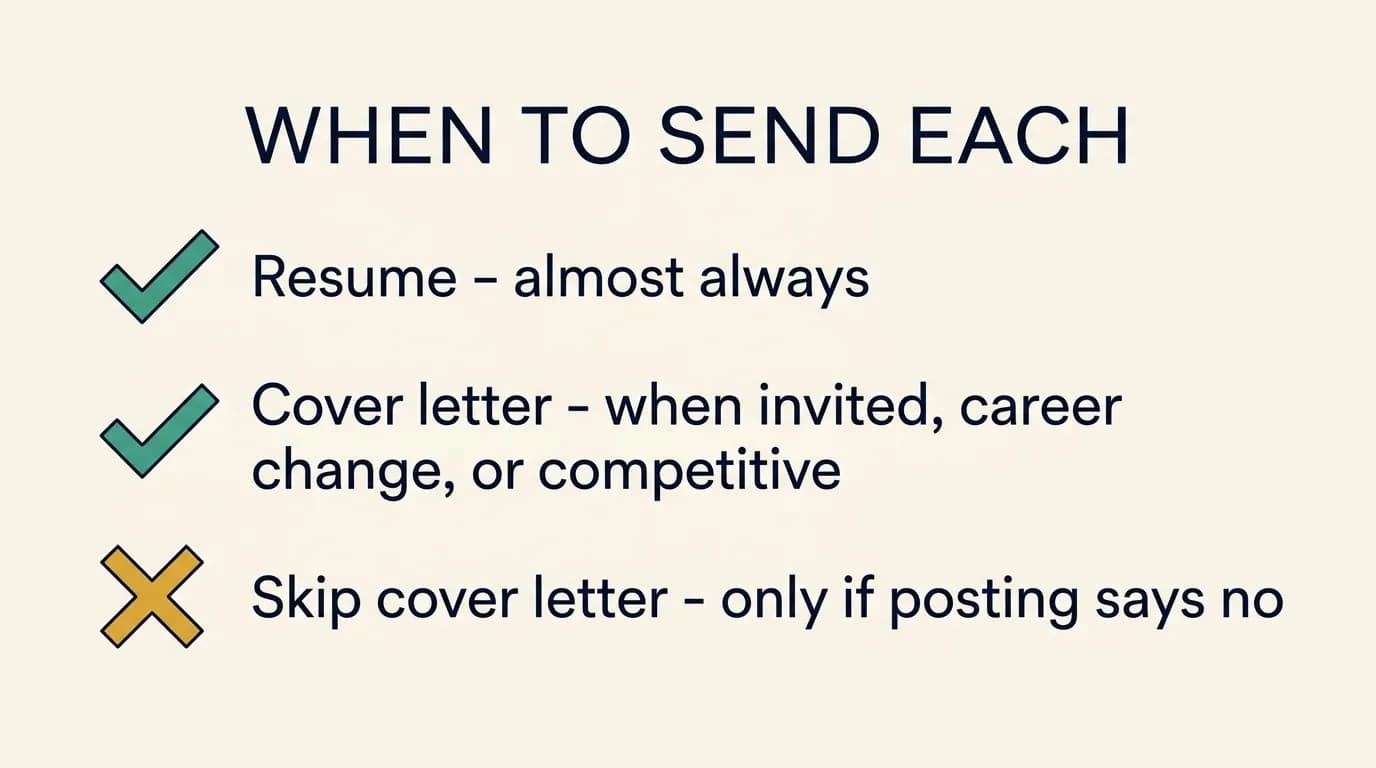
Almost always submit a resume. Add a cover letter when the application invites one, when you're changing careers, or when the role is competitive. Skip it only when the posting explicitly says not to. (More on the ideal cover letter length.)
They should tell the same story
The fastest way to look careless is a cover letter that contradicts your resume. Keep titles, dates, and the headline achievement consistent across both, and mirror the posting's keywords in each. The resume proves it; the letter frames it.
Let Talorr handle both
Talorr tailors your resume to any job and drafts a matching cover letter from the same source, so the two documents tell one consistent, keyword-matched story without you copy-pasting between tabs.
Frequently asked questions
- Do I need a cover letter and a resume?
- Always submit a resume. Add a cover letter when the application invites one, when you're changing careers, or when the role is competitive enough that a strong note tips the decision. Skip it only when the posting says not to include one.
- What's the main difference between a cover letter and a resume?
- A resume is a scannable record of your facts (roles, achievements, skills); a cover letter is a short, tailored pitch explaining why you fit this specific job. The resume does the filtering; the letter adds context and voice.